How to Budget When Your Income Is Irregular or Freelance
 By Marcus Cole10 min read
Updated May 22, 2026
When your income changes every month, traditional 'subtract bills from paycheck' budgeting falls apart. The fix is to stop budgeting paycheck by paycheck and start budgeting from a baseline. Nobody taught us this. Let me fix that.
Why standard budgets break on irregular income
Most budgeting advice assumes a single, predictable paycheck. Freelancers and gig workers get hit with feast-and-famine cycles that wreck a rigid monthly template.
Step 1: Set a conservative baseline income
Look back at the last 12 months. Use your lowest realistic monthly income — not the average — as the baseline you actually budget from.
Step 2: Use a holding account
Send all incoming client payments into one 'holding' account. Pay yourself a fixed monthly 'salary' from that account into your spending account.
How this stabilizes life
Your everyday checking account sees a steady paycheck, even though your business income is bumpy.
What to do in big months
Extra cash stays in the holding account or moves into tax, savings, and sinking funds — not lifestyle.
Step 3: Reserve for taxes from every payment
In the US, self-employment taxes are not withheld. Move a percentage of every payment into a separate tax account immediately. Confirm your specific obligation with a tax professional or the IRS.
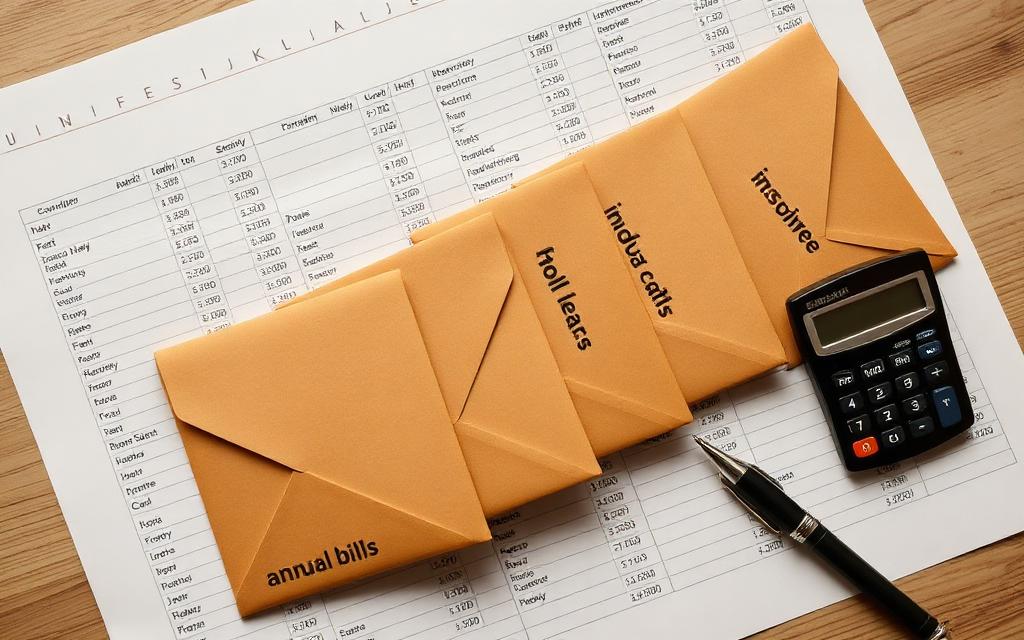
Step 4: Build sinking funds for predictable bills
Annual software renewals, insurance, equipment, and quarterly taxes get their own monthly contribution so they do not blow up a slow month.
Step 5: Build a deeper emergency fund
Freelancers benefit from a larger cushion than salaried workers — often several months of expenses — to ride out slow periods without raiding tax money.
Key facts
- Budgeting from your lowest realistic month, not average month, is more resilient.
- Self-employment taxes in the US are paid by you, not withheld by an employer.
- Holding accounts smooth out feast-and-famine cycles.
Step-by-step
1. Pull 12 months of income
Use the lowest realistic month as your baseline.
2. Open a separate holding account
All client payments land here.
3. Pay yourself a fixed monthly salary
Transfer to your spending account on the same day each month.
4. Move tax reserves immediately
A percentage from every payment, confirmed with a tax pro.
5. Fund sinking funds and savings
Monthly, from the holding account.
6. Keep an emergency fund of several months of expenses
Aim larger than a salaried worker would.
Practical example
A freelancer who averaged $5,500/month over the past year but had a low month of $3,400 might set a $3,400 baseline. All client payments go to a holding account. They pay themselves $3,400/month, move 25–30% to a tax account, fund sinking funds, and let the rest build the emergency fund.
Common mistakes to avoid
- Spending big months as if they will repeat.
- Forgetting to reserve for taxes.
- Mixing personal and business income in one account.
- Building a budget around average income instead of low income.
Frequently asked questions
How much should I set aside for taxes?
Common ranges in the US are 25–35% of self-employment income, but your real number depends on your situation. Confirm with a tax professional or the IRS.
What if my low month is too low to live on?
Use a slightly higher baseline backed by a larger emergency fund, and aggressively trim fixed costs.
Do I need separate bank accounts?
Strongly recommended. Separate business, tax, and personal accounts make the system much easier to maintain.
Keep reading
One practical money lesson every week
Join the Money With Marcus newsletter for short, useful weekly guides. No spam, ever.
Join the newsletterSources:
- IRS — Self-employment tax and estimated tax payment guides
- Consumer Financial Protection Bureau — Budgeting for irregular income
- Bankrate — Emergency fund and freelancer finance guides
About Marcus Cole
Marcus is a 34-year-old financial educator who paid off $47,000 in debt and now explains money in plain language. Nobody taught us this. Let me fix that.
Comments
Comments are moderated for quality and safety. Comment section coming soon.