Best High-Yield Savings Accounts 2025: Rates and Reviews
 By Marcus Cole8 min read
Updated June 2, 2026
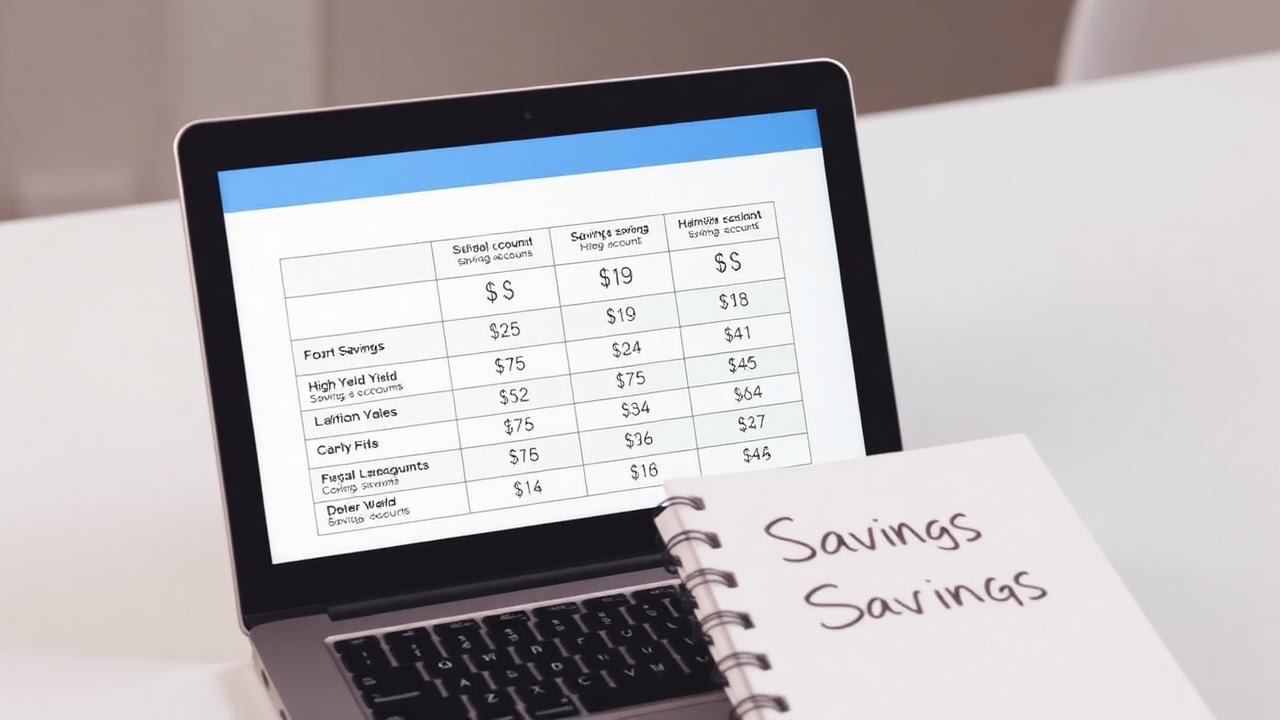
Choosing a high-yield savings account in 2025 is not about chasing the single highest rate on the internet — it is about picking an account that stays competitive, charges nothing, and is easy to actually use. Nobody taught us this. Let me fix that.
What 'high-yield' really means
A high-yield savings account pays meaningfully more than the average traditional bank account. Rates change over time and are not guaranteed. Confirm the current published APY on the bank's own site before opening.
The six factors that matter
Rate is just one of them.
Published APY
Look at the current rate, not last year's marketing.
Fees
Monthly maintenance, transfer, paper statement, and inactivity fees.
Minimums
Some accounts only pay the headline rate above a balance threshold.
Access
Transfer speed to your checking, mobile app quality, ATM network if relevant.
Insurance
FDIC at banks, NCUA at credit unions, up to applicable limits.
Reputation and stability
Look for established institutions with clear ownership and disclosures.
Online banks vs. traditional banks
Online banks typically offer higher rates and lower fees because they have no branches. Traditional banks offer in-person service and broader account ecosystems.
How to actually pick one
Make a short list of three accounts that meet your criteria, compare current published rates and disclosures, then open the one with the best long-term profile — not just the best teaser rate.
Key facts
- Rates move; structure of the account matters more than today's APY.
- Fees can quietly erase a rate advantage.
- FDIC and NCUA insurance protect deposits up to applicable limits.
Step-by-step
1. Decide your purpose for the account
Emergency fund, sinking funds, short-term savings goal.
2. List your must-haves
No fees, no minimums, mobile-first, fast transfers.
3. Shortlist three accounts that meet your must-haves
Compare on official bank sites.
4. Check current rates, fees, and reviews
Avoid relying on outdated articles.
5. Open the account and set up a transfer
Automate even a small weekly amount.
6. Revisit the choice yearly
Move money if your bank stops being competitive.
Practical example
If you keep $10,000 in an account paying a meaningfully higher rate than a traditional bank, the difference over a year can comfortably cover a sinking fund category. The exact dollar amount depends on the current rate environment — always check the bank's official site.
Common mistakes to avoid
- Chasing the single highest APY without checking fees.
- Ignoring the published terms and conditions.
- Leaving an emergency fund in a checking account out of habit.
- Switching accounts every few months for tiny rate differences.
Frequently asked questions
What is a good HYSA rate?
A 'good' rate is one meaningfully above the national average and competitive with the top online banks. Compare on the institution's site, not third-party averages.
Are online banks safe?
Reputable online banks are FDIC-insured at the same limits as traditional banks.
How often do HYSA rates change?
They move with broader interest rates and can change at any time, sometimes monthly.
Keep reading
One practical money lesson every week
Join the Money With Marcus newsletter for short, useful weekly guides. No spam, ever.
Join the newsletterSources:
About Marcus Cole
Marcus is a 34-year-old financial educator who paid off $47,000 in debt and now explains money in plain language. Nobody taught us this. Let me fix that.
Comments
Comments are moderated for quality and safety. Comment section coming soon.