The Real Cost of Carrying a $5,000 Credit Card Balance for 5 Years
 By Marcus Cole9 min read
Updated May 12, 2026
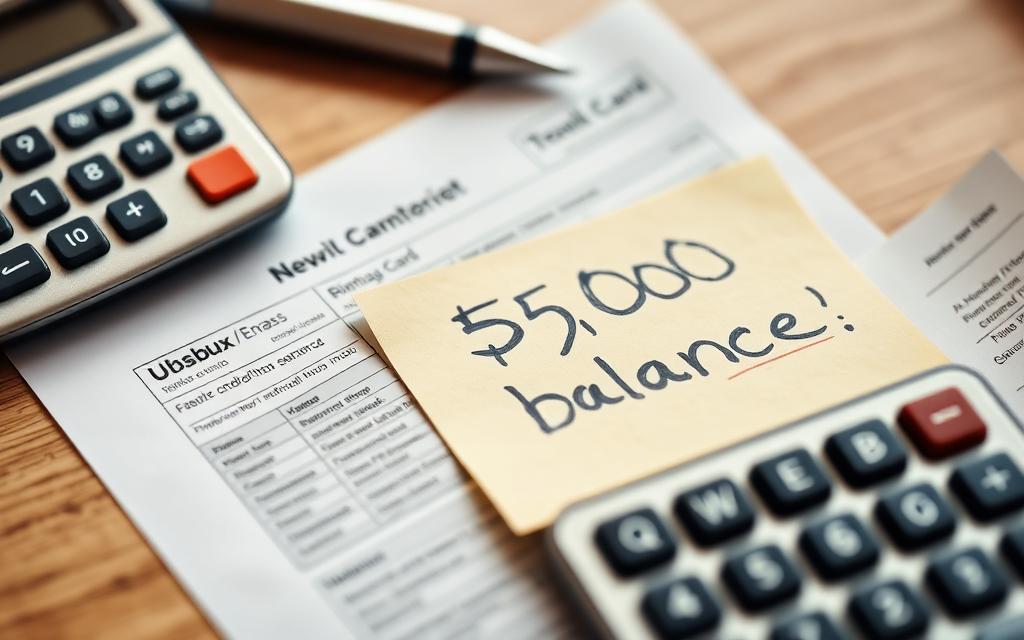
A $5,000 credit card balance does not just sit there. It compounds — quietly, monthly, and ruthlessly. Here is what that number can actually cost you over five years if you only make minimum payments. Nobody taught us this. Let me fix that.
How credit card interest actually works
Most cards calculate interest daily based on your average daily balance. The card's APR is divided into a daily rate, applied to your balance, and added to what you owe — which then accrues more interest.
Why the minimum payment is a trap
Minimum payments are usually a small percentage of your balance, often just enough to cover interest plus a sliver of principal. That is why a balance can stay close to the same for years.
The CARD Act minimum payment box
US credit card statements show how long it would take to repay the balance making only minimum payments. Read that box — it is often eye-opening.
Sample math on a $5,000 balance
At a 22% APR, paying only the minimum can take well over a decade and cost thousands in interest. Plug your real APR and payment into a credit card payoff calculator from Bankrate or NerdWallet for an exact number.
How to escape the minimum payment loop
Three main levers: pay more than the minimum, lower the interest rate (balance transfer or consolidation), or both. Even an extra $50–$100 a month meaningfully shortens the timeline.
When a balance transfer card helps — and when it does not
A 0% intro APR can speed up payoff if you have a plan to clear the balance before the promo ends. It hurts if you keep using the original card or do not pay it off in time.
Key facts
- Credit card interest typically compounds daily.
- Minimum payments are designed to keep you in debt longer.
- Your APR, not your balance, drives most of the long-term cost.
Step-by-step
1. Find your current APR and balance
Both are on your statement.
2. Use a payoff calculator
Try Bankrate, NerdWallet, or a CFPB tool.
3. Decide on a fixed monthly payment above the minimum
Lock it in via autopay.
4. Stop adding new charges to the card
You cannot outrun a balance you keep growing.
5. Consider a balance transfer only with a clear payoff plan
Read fees and promo end dates carefully.
6. Recheck every 6 months
Increase the payment when income or budget allows.
Practical example
Sample: a $5,000 balance at 22% APR. Paying only the minimum can stretch into many years and add thousands in interest. Paying a fixed $200/month instead can clear the balance in roughly 2.5–3 years with far less interest. Use a calculator with your real numbers for an exact figure.
Common mistakes to avoid
- Treating minimum payments as 'on time and fine.'
- Doing a balance transfer and continuing to spend on the old card.
- Ignoring promo end dates on transfer cards.
- Closing paid-off cards immediately, which can hurt your credit utilization.
Frequently asked questions
Does APR change?
Variable APRs can change with the prime rate. Promotional rates also end on a specific date stated in the cardholder agreement.
Should I pay off the highest balance or highest rate first?
Highest rate (avalanche) saves the most money. Smallest balance (snowball) gives faster wins. Both work — pick one and commit.
Will paying down a card improve my credit score?
Lowering credit utilization often helps, but credit scoring uses many factors. Results vary by individual.
Keep reading
Start your debt freedom journey
Explore Marcus's debt payoff guides and pick a strategy that fits your life — snowball, avalanche, or a hybrid plan.
See debt guidesSources:
- Consumer Financial Protection Bureau — Credit card minimum payment disclosures
- Federal Reserve — Consumer credit and interest rate reports
- Bankrate — Credit card payoff calculator and APR data
About Marcus Cole
Marcus is a 34-year-old financial educator who paid off $47,000 in debt and now explains money in plain language. Nobody taught us this. Let me fix that.
Comments
Comments are moderated for quality and safety. Comment section coming soon.