I Bonds vs. TIPS: Which Inflation-Protected Investment Is Better?
 By Marcus Cole9 min read
Updated July 8, 2026
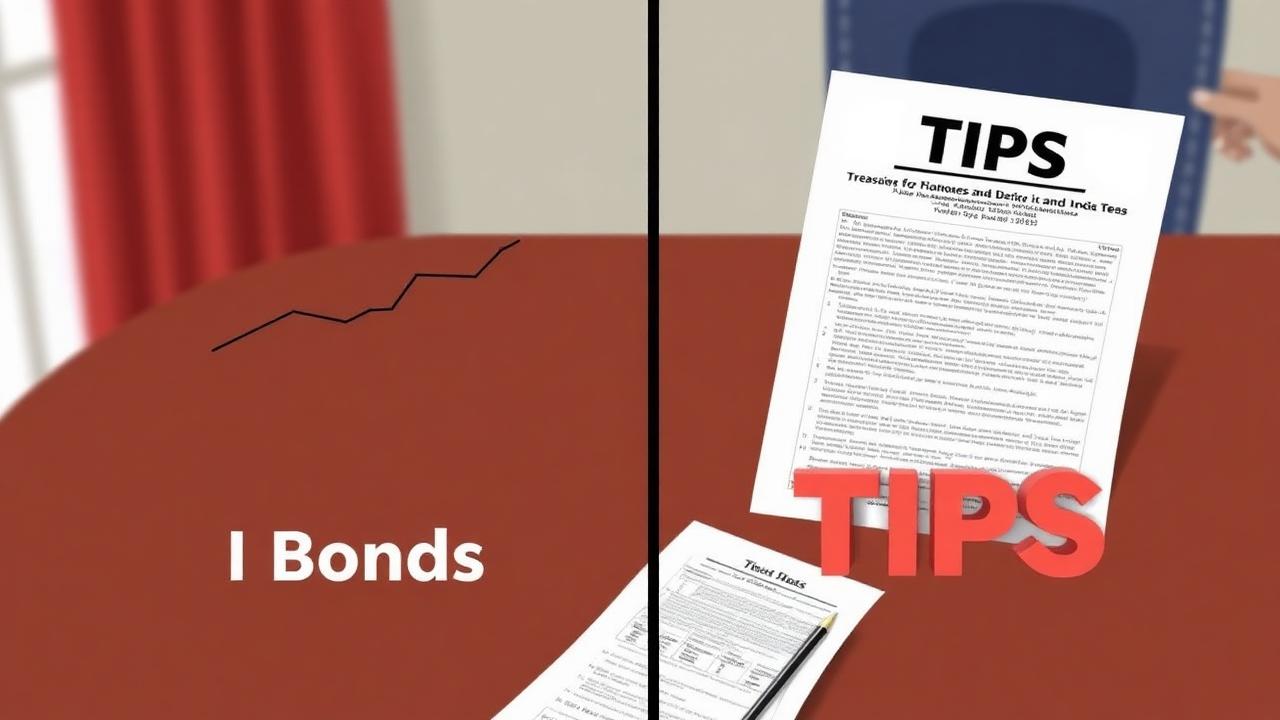
When inflation rises, people start hunting for 'safe' investments that can keep up. I Bonds and TIPS are two of the most common U.S. answers — and they are not interchangeable. Nobody taught us this. Let me fix that.
What I Bonds are
I Bonds are U.S. savings bonds issued by the Treasury whose interest rate has two parts: a fixed rate and an inflation-adjusted rate that resets twice a year. You buy them directly from TreasuryDirect.
What TIPS are
TIPS — Treasury Inflation-Protected Securities — are Treasury bonds whose principal value adjusts with inflation. They pay interest based on that adjusting principal. You can buy them at auction or through a brokerage.
Key differences
The two share a goal but differ in how you access them.
Liquidity
I Bonds generally can't be cashed in for the first year and have a small interest penalty if redeemed within five years. TIPS trade in the secondary market and can be sold anytime, with prices that move.
Purchase process
I Bonds are bought directly from TreasuryDirect. TIPS can be bought through a regular brokerage account or directly from the Treasury.
Annual purchase limits
I Bonds have annual purchase limits per person. TIPS generally do not have the same kind of cap.
Taxes
Both are exempt from state and local income tax. Federal tax treatment differs in timing — verify current rules before relying on a strategy.
Risks and trade-offs
Both products protect against inflation, but they don't eliminate other risks. TIPS prices can fall if real interest rates rise. I Bonds have purchase limits and liquidity restrictions. Neither is a substitute for an emergency fund.
Who each tends to fit
I Bonds often fit savers looking for a longer-term, set-it-and-forget-it inflation hedge for a portion of cash. TIPS often fit investors who want inflation-protected exposure inside a diversified investment portfolio — sometimes via a TIPS fund or ETF for simplicity.
Key facts
- Both I Bonds and TIPS are designed to keep pace with inflation.
- I Bond rates reset on a fixed schedule; TIPS principal adjusts with inflation.
- Exact current rates change — check Treasury sources before buying.
Step-by-step
1. Define the goal for the money
Short-term cash buffer vs. long-term portfolio diversification.
2. Check current Treasury rates
TreasuryDirect publishes I Bond rates; TIPS rates come from auctions and market pricing.
3. Decide where you'll hold the investment
TreasuryDirect for I Bonds; a brokerage for TIPS or TIPS funds.
4. Confirm purchase limits and restrictions
Annual caps and lockup periods can affect your plan.
5. Treat them as one slice of a broader plan
Not as a replacement for stocks, bonds, or savings.
Practical example
A long-term investor uses a TIPS fund inside a retirement account for inflation-protected bond exposure, while separately buying a smaller amount of I Bonds through TreasuryDirect as part of a longer-horizon cash bucket.
Common mistakes to avoid
- Treating I Bonds as a substitute for an emergency fund — they are locked for the first year.
- Buying TIPS individually without understanding how prices move.
- Ignoring tax treatment differences.
- Loading up on inflation hedges and abandoning broad diversification.
Frequently asked questions
Are I Bonds and TIPS risk-free?
They are backed by the U.S. government, but they aren't free of all risk — including the risk that other investments outperform them.
Can I lose money on TIPS?
If you sell TIPS before maturity in the secondary market, the price you receive may be less than what you paid.
Where do I buy I Bonds?
Directly through TreasuryDirect.gov for U.S. investors.
Keep reading
Learn investing without the jargon
Explore Marcus's beginner-friendly investing guides — index funds, ETFs, Roth IRAs, and long-term wealth building.
See investing guidesSources:
About Marcus Cole
Marcus is a 34-year-old financial educator who paid off $47,000 in debt and now explains money in plain language. Nobody taught us this. Let me fix that.
Comments
Comments are moderated for quality and safety. Comment section coming soon.